
If you’re a physiotherapy clinic owner, you’ve probably faced this at some point: gaps in your schedule, clinicians without full caseloads, or the pressure of hiring and needing patients fast.
Google Ads is one of the most reliable ways to solve that problem.
Why Google Ads Works for Physiotherapy Clinics
Google Ads works because it captures intent.
When someone searches for:
- “physio near me”
- “shoulder pain treatment”
- “ACL rehab physiotherapist”
…they’re not browsing—they’re actively looking for help.
That’s what makes Google Ads different from social media. On Facebook or Instagram, you’re interrupting someone. On Google, you’re meeting them at the exact moment they need you.
For physio clinics, this is especially powerful because:
- Patients are often in pain and want fast solutions
- Many conditions require timely treatment
- Booking decisions happen quickly
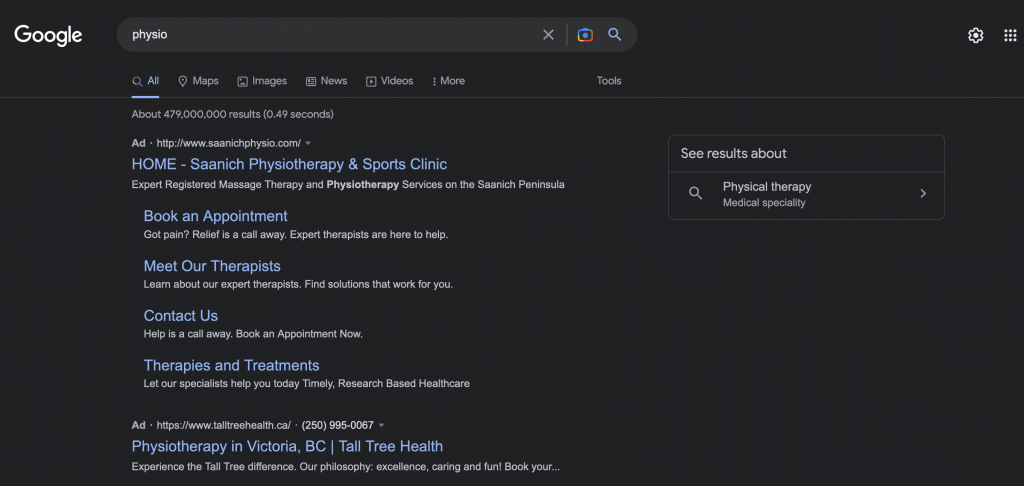
Understanding the Basics of Physical Therapy Google Ads
To use Google Ads effectively, you don’t need to master every technical detail—but you do need to understand how the system actually makes decisions.
At a high level, Google Ads operates as an auction system.
But it’s not just about who bids the most.
How the Auction Actually Works
Every time someone searches, Google evaluates:
- Which advertisers are targeting that keyword
- How much they’re willing to pay
- How relevant and useful their ads are
Then it determines:
- Which ads show
- In what order
This means a clinic with a better strategy can outperform a competitor with a higher budget.
Want a free website & marketing audit?
We’ll show you what’s working, what isn’t, and give you a roadmap for clinic growth. Completely free, no obligation whatsoever.

Key Terms in Context
- Keywords: Define who sees your ads
- CPC: What you pay per click
- CTR: Measures how compelling your ad is
- Conversion Rate: Measures how well traffic turns into leads
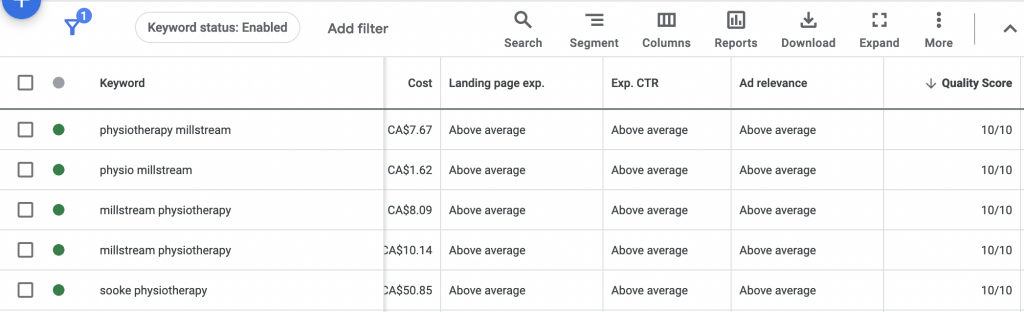
- Quality Score: Impacts both cost and visibility
The Three Core Factors
1. Your Bid
This is the maximum amount you’re willing to pay for a click.
Higher bids can improve visibility—but they’re only one piece of the puzzle.
2. Ad Quality
Google wants to show users the most relevant results.
It evaluates:
- How closely your ad matches the search
- How likely users are to click
3. Landing Page Experience
After someone clicks, Google looks at:
- Page relevance
- Load speed
- User experience
A poor landing page can hurt performance—even if your ad is strong.
RELATED READING: 10 Common Google Ads Mistakes Physiotherapists Make (and How to Avoid Them)
Structuring High-Performing Google Ad Campaigns
A well-structured account = better performance + lower costs.
Best Practices
- Separate campaigns by service or location
- Keep ad groups tightly themed
- Avoid dumping all keywords into one campaign
Example Structure
- Campaign: “Physio – Core Services”
- Ad Group: Back Pain
- Ad Group: Knee Pain
- Ad Group: Shoulder Pain
- Campaign: “Pelvic Health”
- Campaign: “Sports Physio”
Budget Allocation
- Prioritize high-demand services
- Adjust based on performance data
Common Mistakes
- No clear strategy
- Overcomplicating structure
- Too many keywords in one ad group
Writing Ads That Actually Convert into New Patients
Your ad is the bridge between:
- A patient’s search
- Your clinic
If that bridge is weak, nothing else matters.
Even with great keywords and structure, poor ad copy will:
- Reduce clicks
- Lower Quality Score
- Increase costs
What Patients Are Really Looking For
Patients are not looking for complex explanations or technical jargon. They’re looking for:
- Relief from pain
- Confidence in your expertise
- A clear next step
Your ads need to reflect that.
The Psychology Behind High-Performing Ads
When someone sees your ad, they’re asking:
- “Does this solve my problem?”
- “Can I trust this clinic?”
- “Is this convenient?”
Your job is to answer those questions quickly and clearly.
Headlines: Your Most Important Asset
Headlines are the first thing users see.
Strong headlines typically include:
- The condition (“Back Pain Relief”)
- The service (“Physiotherapy Clinic”)
- A benefit or action (“Book Today”)
Examples:
- “Same-Day Physio Appointments”
- “Knee Pain Treatment – Book Now”
- “Trusted Physiotherapists Near You”
These work because they:
- Match intent
- Emphasize outcomes
- Encourage action
Descriptions: Reinforcing the Decision
Descriptions give you more space to build trust, highlight expertise, and reduce hesitation.
Effective descriptions often include:
- Years of experience
- Types of treatment offered
- Ease of booking
Ad Extensions: Increasing Visibility and Trust
Extensions make your ads larger and more useful.
Key ones for physio clinics:
- Call extensions: Encourage immediate contact
- Location extensions: Reinforce local presence
- Sitelinks: Direct users to specific services
These not only improve user experience—they can also improve performance.
Get The Ultimate PT Clinic Marketing Handbook
It’s packed with tips and strategies you can use to grow your clinic today.
How Much Should You Spend on Google Ads
One of the most common questions clinic owners ask is:
“How much should I spend on Google Ads?”
The honest answer is: it depends.
But more importantly, it’s not about how much you spend, it’s about how efficiently that spend turns into patients.
What Actually Drives Cost
Several factors influence your costs:
1. Competition
More clinics bidding on the same keywords = higher costs.
Urban areas tend to be:
- More competitive
- More expensive
2. Location
Different regions have different:
- Search volumes
- Cost per click ranges
3. Services Offered
Specialized services may:
- Cost more per click
- But generate higher-value patients
Reframing the Budget Question
Instead of asking:
“What’s the cheapest way to run ads?”
Ask:
“What does it cost to acquire a patient—and is that profitable?”
For example:
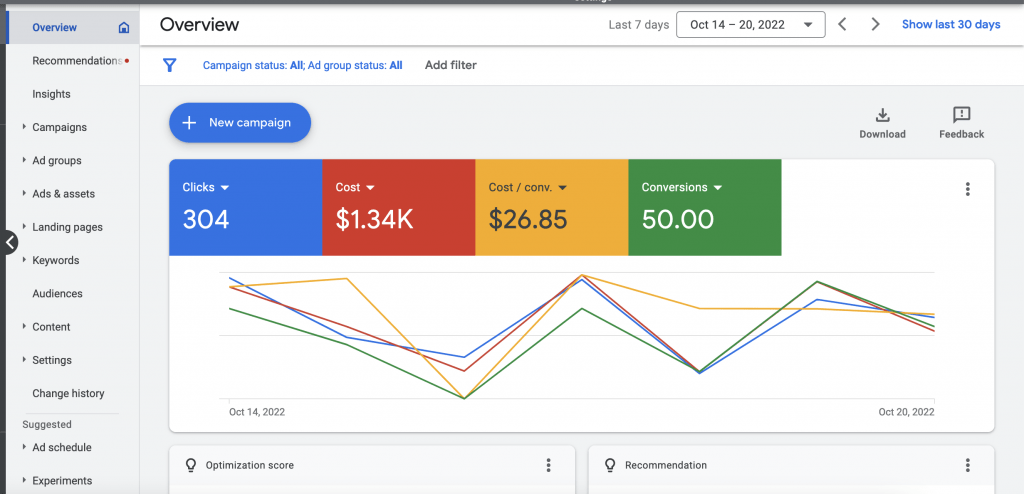
- If a new patient is worth $300–$1,000+ over time
- Paying $50–$150 for a lead can make sense
Starting with a Test Budget
For most clinics, the best approach is:
- Start with a controlled budget
- Focus on high-intent keywords
- Measure results carefully
This allows you to validate performance, reduce risk, and learn quickly.
Scaling Safely
Once campaigns are working:
- Increase budget gradually
- Monitor performance closely
Scaling too quickly can lead to increasing costs unnecessarily and reducing campaign efficiency.
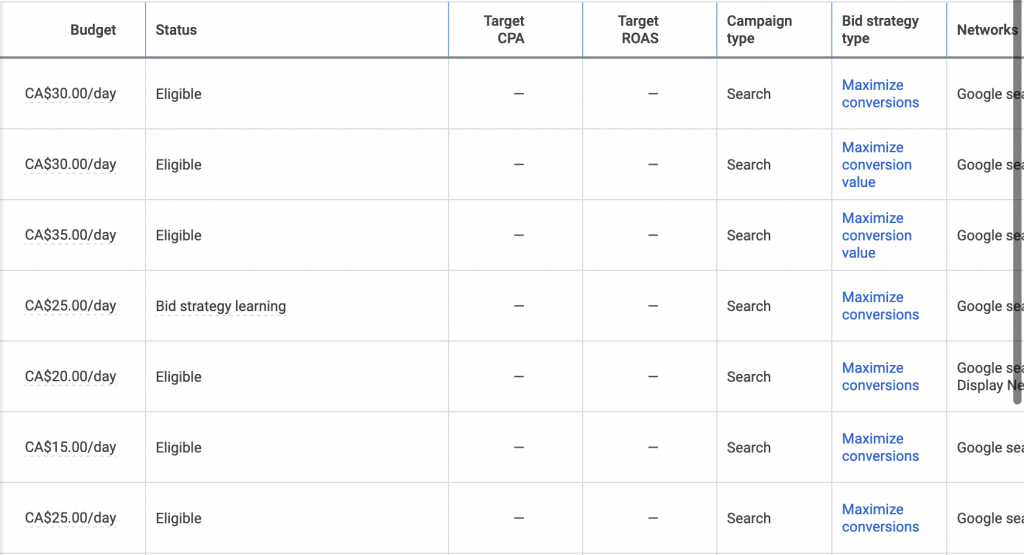
You may also wish to work with an experienced digital marketing or advertising agency who can help optimize your campaign performance and develop strategies to maximize ROI.
Conversion Tracking & Measuring ROI for Your Physical Therapy Google Ads
Running Google Ads without tracking conversions is like driving without a dashboard.
You might be moving—but you have no idea how fast you’re going or if you’re going in the right direction.
Why Tracking Is Non-Negotiable
Without proper tracking, you can’t answer key questions:
- Which keywords are generating patients?
- Which campaigns are profitable?
- Where is your budget being wasted?
Tracking turns guesswork into data-driven decision-making.
What Conversions You Should Be Tracking
For physio clinics, the most important conversions are:
- Phone Calls – Many patients prefer to call directly.
- Form Submissions – These include both contact forms and consultation requests. They indicate strong interest, even if the booking happens later.
- Online Bookings – This is the most direct conversion.
Understanding the Key Metrics
Cost Per Lead (CPL)
How much you pay to generate a lead. This helps you evaluate efficiency.
Cost Per Acquisition (CPA)
How much you pay to acquire an actual patient.
This is more important than CPL because:
- Not all leads convert
- Some leads have higher value
Return on Ad Spend (ROAS)
Revenue generated relative to ad spend. This tells you if your ads are actually profitable.
Conclusion
Google Ads is one of the most powerful tools available to physiotherapy clinics—but only when it’s approached strategically.
When done right, it allows you to:
- Generate a consistent flow of high-quality patient leads
- Fill clinician schedules on demand
- Support hiring and expansion with confidence
- Build a more predictable, scalable business
But the difference between success and wasted spend comes down to execution.
It’s not just about running ads—it’s about:
- Targeting the right keywords
- Structuring campaigns properly
- Converting clicks into booked patients
- Tracking and optimizing continuously
Most clinics don’t struggle because Google Ads “doesn’t work.”
They struggle because the strategy isn’t built specifically for how physio clinics grow.
That’s where having the right partner makes all the difference.
Want your Google Ads done for you? We’re physiotherapy marketing experts and we specialize in grow private practices. Get in touch with us to learn more.