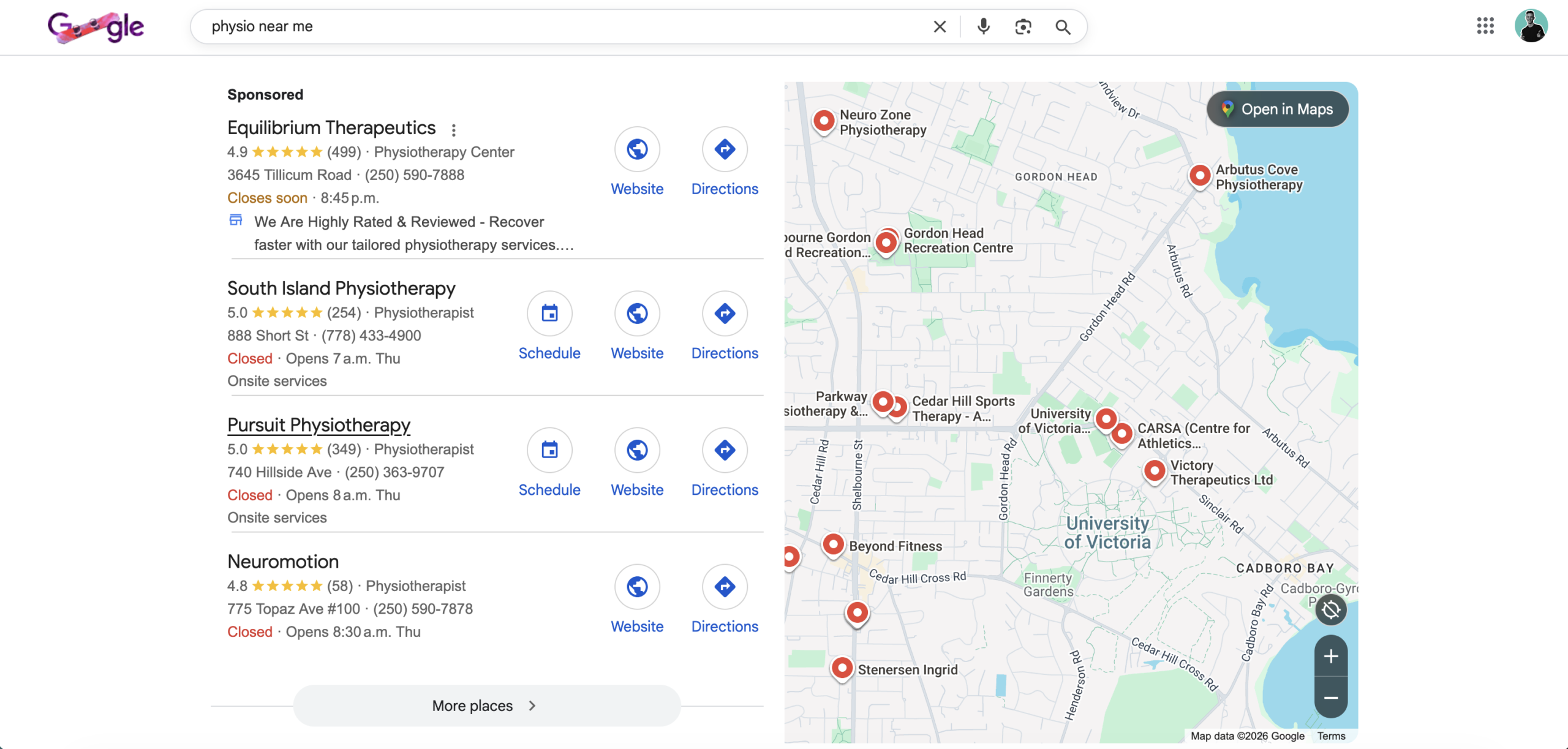
Almost half of all Google searches look for local information—46% to be exact (Google). That means people near you search for help with back pain, sports injuries, and rehab every day. If your clinic does not show up, they book somewhere else.
SEO for physiotherapists helps your clinic rank higher on Google so local patients can find you, trust you, and book appointments. When you build a strong website, target the right keywords, and optimize your local listings, you increase your visibility without paying for ads.
You need more than a basic website. You need solid SEO foundations, smart local strategies, and clear answers to common questions patients ask. Get these right, and you turn online searches into steady appointment requests.
Essential SEO Foundations for Physiotherapists
Strong SEO starts with clear goals, a solid website, and local focus. When you align your content, structure, and technical setup, you improve search rankings and attract the right patients.
What Is SEO for Physiotherapists and Why It Matters
SEO, or search engine optimization, helps your physiotherapy clinic appear when people search for services like back pain relief physiotherapy or dry needling near me. It connects your services to real patient searches.
Physical therapy SEO focuses on local intent. Most patients look for care in their city, not across the country. You need to target terms such as:
- “Manual therapy in [City]”
- “Injury prevention physiotherapist near me”
- “Sports physio [Suburb]”
You also need clear page titles and a strong meta description for each service page. Write them in plain language. Include your main keyword and location. Keep them accurate so search engines and users know what to expect.
SEO matters because most people use search engines to find healthcare providers. In fact, 77% of patients use search engines before booking an appointment (Google Health Study, 2019). If your clinic does not appear, they choose another provider. It’s that simple.
Building a Strong Online Presence
Your online presence goes beyond your website. It includes your Google Business Profile, reviews, and local listings.
Start with your Google Business Profile. Add:
- Correct name, address, and phone number
- Clinic hours
- Real photos of your space
- A clear service list (manual therapy, dry needling, injury prevention)
Ask satisfied patients to leave honest reviews. Reviews improve trust and can support better local search rankings.
Next, create focused service pages. Do not place everything on one page. Build separate pages for:
- Back pain relief physiotherapy
- Sports injury rehab
- Post-surgery rehabilitation
- Dry needling
Use simple headings and explain who the service helps, how it works, and when to book. This helps both search engines and patients understand your expertise.
Consistency matters. Make sure your clinic details match across directories. Even small differences in your address can confuse search engines.
Get a free website and SEO audit
Website Structure and Mobile Optimization
Your website must load fast and work well on phones. Google uses mobile-first indexing, which means it mainly reviews the mobile version of your site for ranking (Google Search Central).
Design a mobile-friendly website with:
- Large, readable text
- Clear call-to-action buttons like “Book an Appointment”
- Simple navigation with no more than 5–7 main menu items
Organize your structure clearly. A basic layout might look like this:
| Page Type | Purpose |
|---|---|
| Home | Overview of your clinic and core services |
| Service Pages | Detailed info on manual therapy, dry needling, etc. |
| About | Credentials and experience |
| Contact | Location, map, booking info |
Create and submit an XML sitemap to help search engines find your pages. Use a proper robots.txt file so you block only the pages you do not want indexed, such as admin areas.
Finally, write a unique meta description for every important page. Keep it under 160 characters. Make it specific. Clear structure and clean technical setup support stronger search rankings and long-term growth.
RELATED READING: Physiotherapy Website Design Guide: Tips, Tools, and Examples
Winning Local SEO Strategies for Physiotherapy Clinics
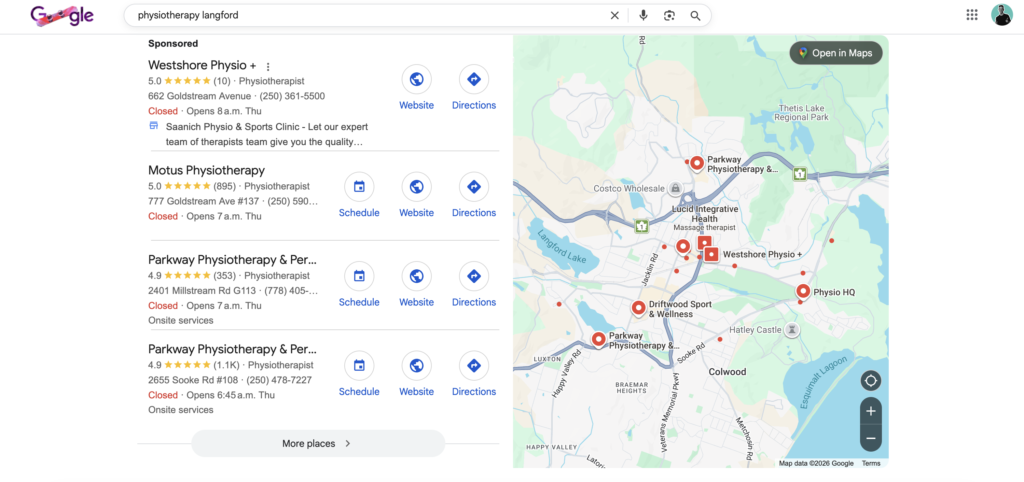
Strong local SEO puts your clinic in front of people who search “physiotherapist near me” or “physiotherapy clinic near me.” You win by showing up in Google Maps, keeping your details consistent, and earning trust through local links and reviews.
Optimizing Your Google Business Profile and Map Pack
Your Google Business Profile (formerly Google My Business) drives visibility in the map pack and Google Maps. When someone searches “back pain physio near me,” Google often shows three local listings first. You want to be there.
Start with complete and accurate information:
- Exact clinic name (no keyword stuffing)
- Correct address and phone number (NAP consistency)
- Updated hours, including holidays
- Primary category: Physiotherapist
- Secondary categories if relevant (e.g., Sports Injury Clinic)
Keep your NAP identical across all local listings, including directories like Practo and other healthcare platforms. Even small differences can weaken local search signals.
Add real clinic photos, treatment room images, and team headshots. Post short updates about services or rehab tips. Ask happy patients to leave detailed reviews that mention services like “knee pain physio” or “sports injury rehab.” Reviews influence rankings and click‑through rates, and they often display as aggregateRating stars in search results.
Reply to every review. It shows activity and builds trust.
Local Link Building and Reputation Management
Local link building strengthens your authority in local search. You need backlinks from websites in your city or region, not random global sites.
Start close to home. Partner with:
- Local gyms and fitness studios
- Sports clubs and school teams
- Community health events
- Local business associations
Ask for a link to your site from their partner or sponsor pages. These links send clear local signals to Google.
List your clinic in trusted healthcare and business directories. Make sure every listing matches your Google Business Profile exactly. That consistency supports rankings for terms like “best physiotherapist near me.”
Reputation matters just as much as links. Create a simple review system. Send a follow‑up email or SMS after appointments with a direct Google review link. Monitor reviews weekly. Address concerns in a calm and clear way.
You build visibility through links. You build trust through reviews. You need both to compete in local SEO.
Get a free website and SEO audit
Frequently Asked Questions
Strong rankings come from clear website structure, useful content, trusted links, and solid local signals. When you focus on what patients search for and make your site easy to use, Google responds.